Agents
Agents are doing real work alongside your team, and that is a good thing. oakallow simply gives every agent its own scoped identity so that work stays visible and traceable: each agent submits and checks permission requests under its own name, its activity is attributed to it in the audit trail, and when an action calls for a person, the approval is a clear, separate human step.
Why give an agent its own identity
Run several agents through one shared account and they all look alike in the record. Every permission check and every approval lands under the same connector identity, so later it is hard to tell which agent did what, or to follow one agent’s work on its own. As you add more agents, that shared view gets harder to read.
A distinct identity per agent gives each one its own name in the audit trail and keeps approvals a clean, separate human step. You get clarity instead of a blur: every action is attributed, easy to trace, and easy to explain, which is exactly what lets people trust agents to do work.
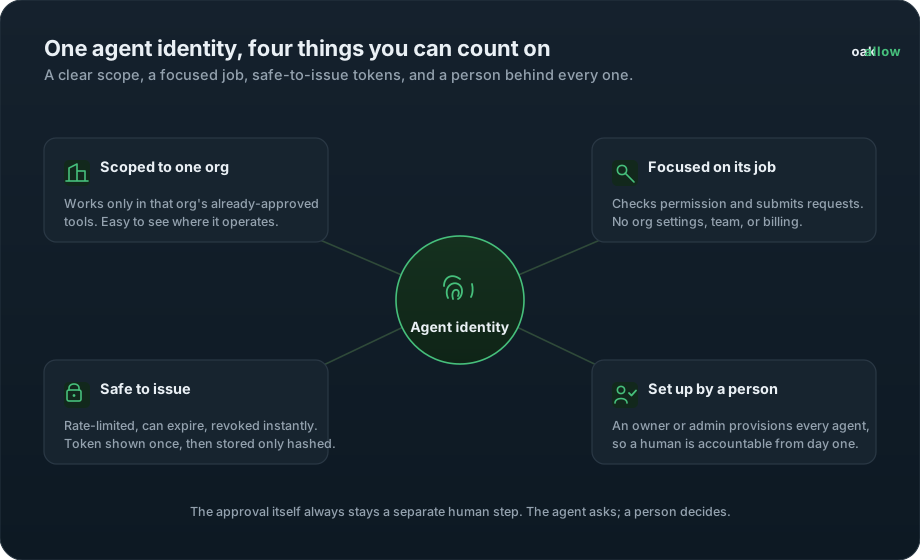
What an agent identity gives you
Its own identity
Each agent gets its own distinct, named identity instead of sharing one connector login with every other agent. You provision it once and hand it a token. No human inbox, no interactive sign-in: the agent authenticates with the token the way a service makes an API call.
Activity you can see
Every permission check an agent makes is recorded under that agent by name. The governance report shows which agent did what, instead of collapsing all of your agents into one shared connector account. You get a clear picture of how each agent is working, in one place.
A clear human approval step
When an action calls for a person, the approval is a distinct human decision, kept separate from the agent that asked. The agent submits and checks; a named person approves. That clean hand-off is what keeps the trail readable and lets people and agents share the work with confidence.
A clear, well-defined surface
An agent identity in oakallow has a scope everyone can see and reason about. That clarity is what makes its activity easy to follow and an agent safe to hand more of the work.
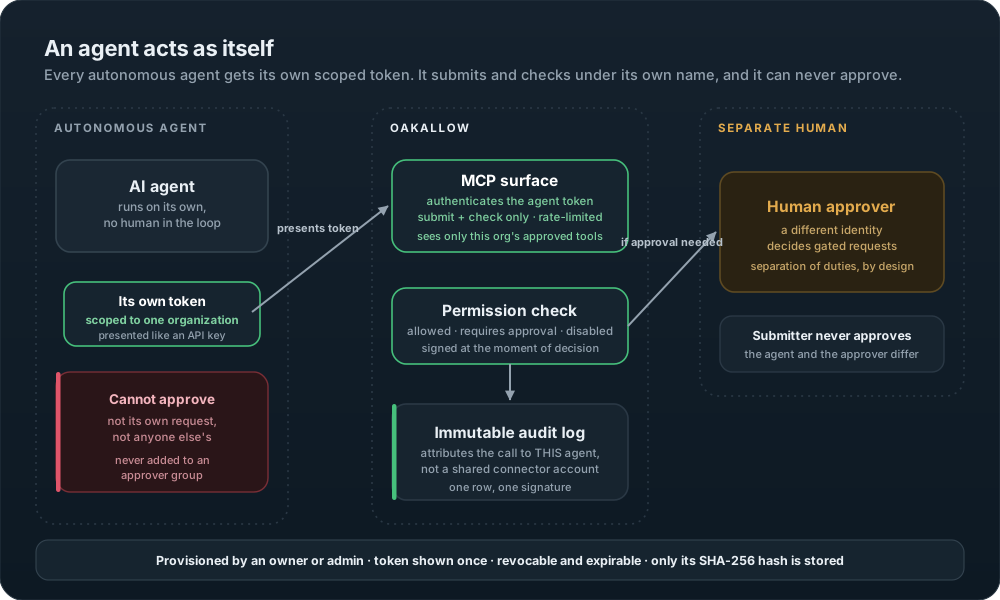
What happens when an agent acts
The same governed pipeline as any other call, with the agent acting under its own name the whole way through.
It signs in as itself
It checks the call
It asks when a person is needed
A person decides
It all lands in the audit log
When does an agent need its own identity?
One simple test: is a person behind the action, or not?
Give it its own identity.
No person in the loop, so it acts under its own name and the approval stays with a human.
Already covered.
They sign in as themselves, so the action is already theirs. No agent identity needed.
Give your agents a name and a clear record.
Agent identities run on the same checked, audited pipeline as everything else in oakallow. Want to set one up? Email support@oakallow.io.
Patent Pending. U.S. Provisional Patent Application No. 64/055,617.